Knowing how to choose the right size painting for your wall is one of those things that sounds simple but trips up a lot of people. Choosing art you love is one thing. Getting the scale right is something else entirely.
1. Start with the furniture, not the wall
Most of the time, a painting isn’t floating in the middle of a blank wall – it’s sitting above a sofa, console table, bed or sideboard.
As a rule of thumb:
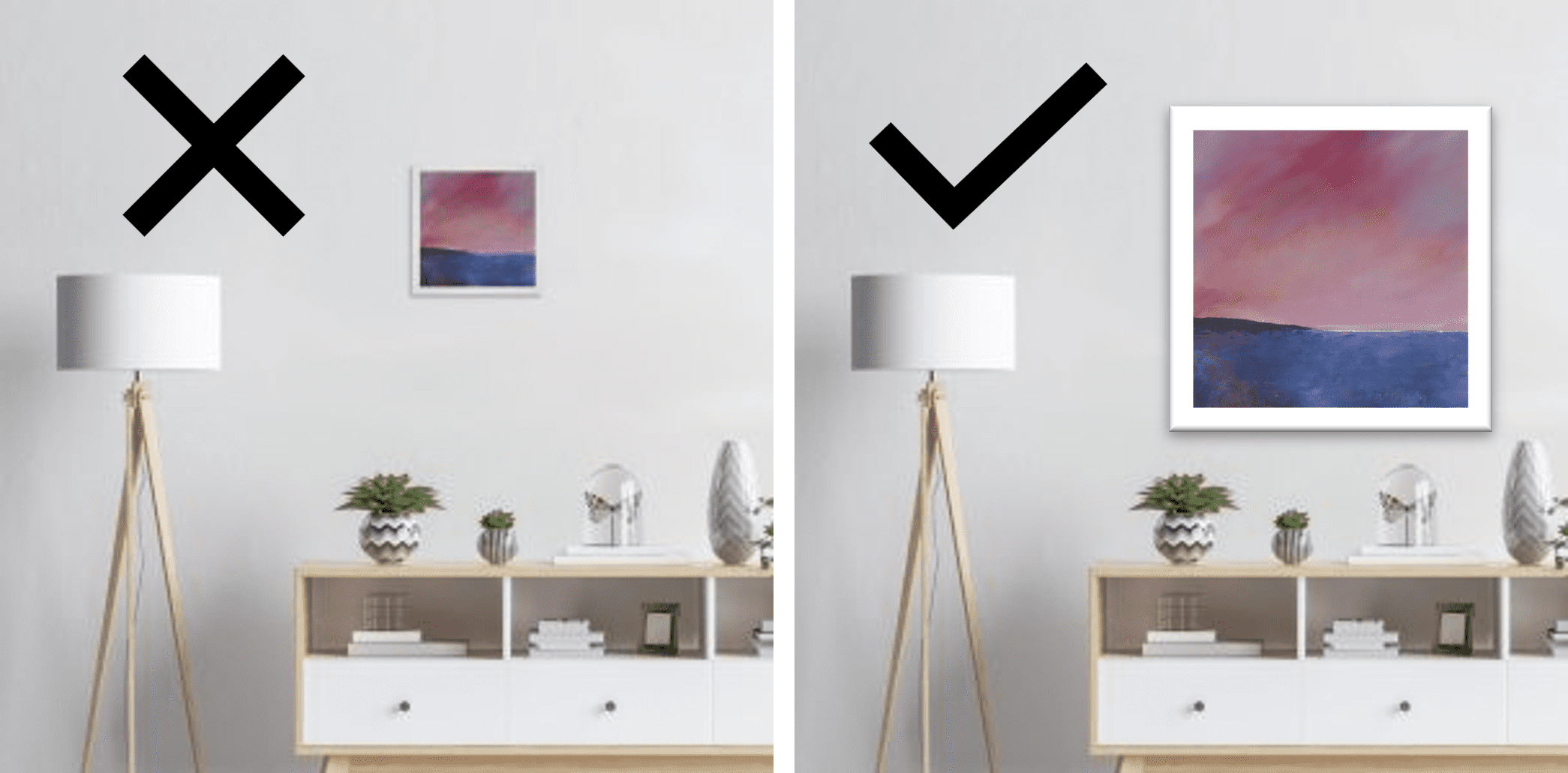
- Aim for artwork that’s around 60–75% of the width of the furniture beneath it.
- So if your sofa is 200cm wide, look for a painting roughly 120–150cm wide (or a pair/triptych that adds up to that).
Too small and it looks like it’s “lost” in the space. Too big and it feels like it’s about to topple onto you.
2. Think in “zones”, not just single walls
In open-plan spaces, it helps to see your home as a set of zones:
- The reading corner
- The dining area
- The desk/workspace
- The sofa and TV area
A large statement piece can anchor a zone – for example, one big canvas behind the dining table. Smaller pieces work well to lead you through a hallway or stairwell.
Ask yourself:
“What’s the main view when I walk into this room, and where do I want the eye to land?”
That’s often where the bigger piece should go.
3. Use paper or tape to test the size
If you’re nervous about committing, do a quick mock-up.
- Use masking tape to outline the size of the painting on the wall.
- Or tape together some old wrapping paper / parcel paper to roughly match the canvas size.
Live with that for a day or two. You’ll quickly feel whether it’s too small, too big or just right for the space.
4. Mind the height: where to hang it
A good starting point is:
- The centre of the painting roughly at eye level – usually about 145–155cm from the floor in most homes.
- Above a sofa or bed, leave around 15–25cm of space between the top of the furniture and the bottom of the painting.
If you have high ceilings, don’t automatically push art too high – keeping it connected to the furniture underneath helps everything feel grounded.
5. One large piece vs a gallery wall
If you’re drawn to lots of pieces, a gallery wall can be brilliant – but it needs a bit of structure.
Choose:
- One “hero” piece to act as the anchor, then
- Smaller works around it, keeping the overall shape within that 60–75% furniture rule.
If you prefer a calmer feeling, go for one large painting instead of lots of smaller ones. A single statement canvas can simplify a room instantly.
6. Don’t be scared of going big
Many people underestimate how much wall space they actually have, especially in modern homes with open-plan layouts.
If the wall is:
- Longer than 250–300cm, or
- It’s the main wall you look at every day,
…a 100 x 100cm or 120 x 100cm painting will usually feel completely at home there.
Large paintings don’t have to be loud – even calm, atmospheric pieces can carry a big wall beautifully.
7. Match the feeling, not just the dimensions
Finally, size is only half the story. Think about what you want the painting to do for the room:
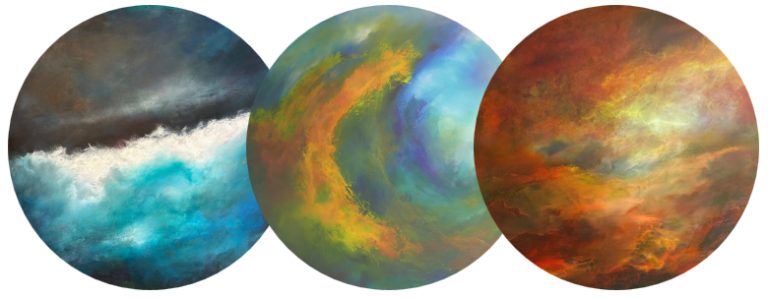
- A big, energetic storm sky to bring drama to a neutral space
- A gentler dawn horizon above the bed to create calm
- A deep, moody seascape in a reading nook to curl up under
When the size feels right and the mood matches the room, you’ll know.
Explore originals and statement pieces
If you’re looking for a painting for a particular wall and you’re not sure on size, you’re always welcome to send me a photo and rough measurements. You can email me at andy@art-haus.co.uk