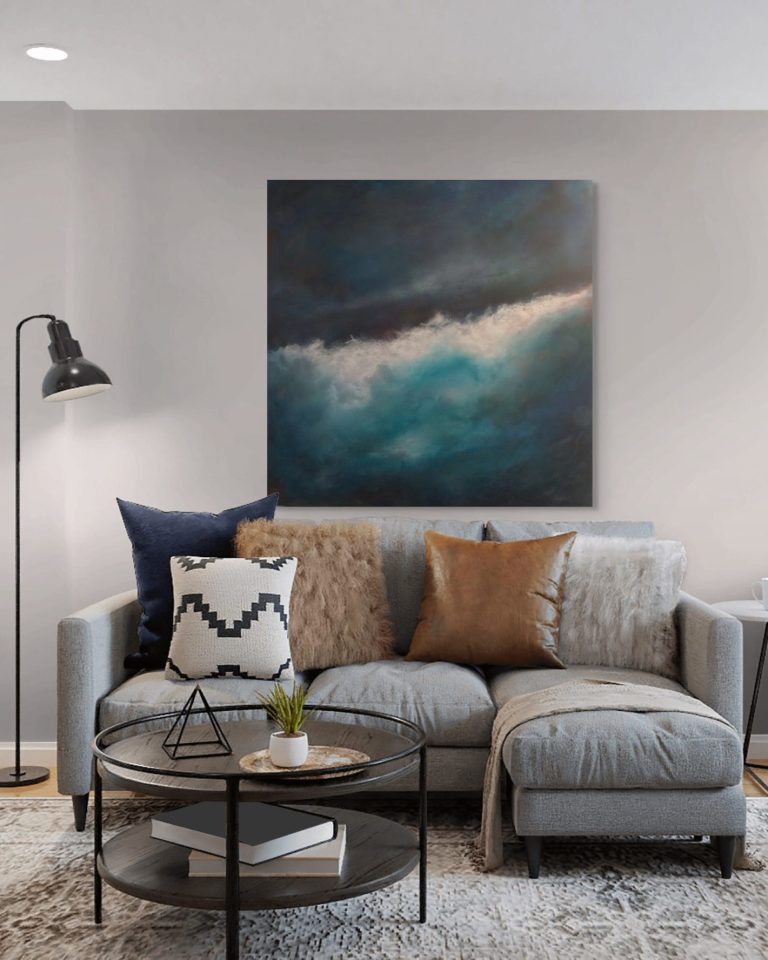
Stylish interiors online can make it look like everyone else magically knows how to hang art. Perfect spacing. Perfect height. Perfect everything.
Real homes have radiators, awkward walls, sloping ceilings, beams, and that one light switch in exactly the wrong place. The good news? You can still hang art beautifully – and it doesn’t have to be complicated.
The “too high” problem
Most people hang art too high. A simple rule of thumb:
Aim for the centre of the artwork to sit roughly at eye level – around 145–150cm from the floor for most people.
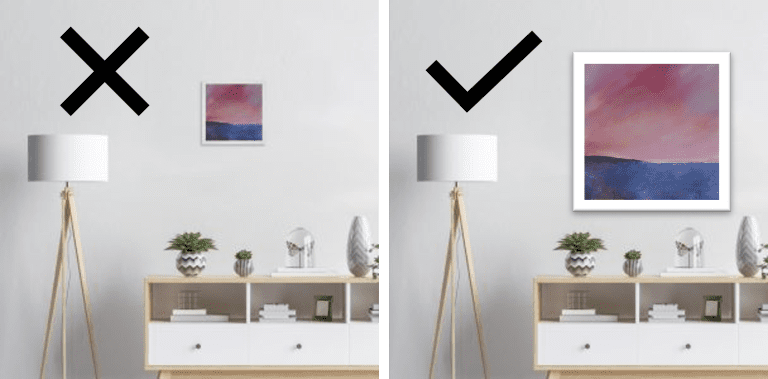
If you’re hanging above a sofa or sideboard, let the artwork “belong” to the furniture:
- Leave roughly 15–25cm between the top of the furniture and the bottom of the frame
- Make sure the piece isn’t narrower than half the width of the furniture underneath
This keeps everything feeling connected instead of the art floating away into empty space.
One statement piece vs a group
You don’t have to build a gallery wall. One strong, atmospheric painting can do far more than lots of small pieces competing for attention.
- Statement piece: Perfect for above a sofa, bed or fireplace. Think of it as the room’s focal point – the quiet (or dramatic) centre of gravity.
- Small pieces: Great for narrow walls, above hooks, in hallways or grouped in threes.
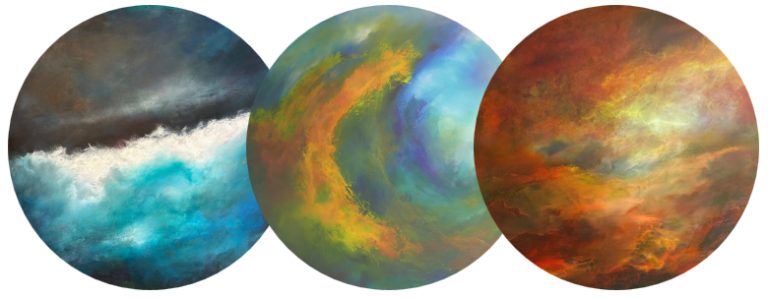
If you’re drawn to large Art Haus canvases, they often work best where they can really breathe – giving the sky and light room to do their thing.
Gallery wall, but not stressful
If you do want a cluster:
- Lay the pieces out on the floor first.
- Start with your favourite piece in the middle and build around it.
- Keep the gaps between frames broadly consistent (around 5–8cm).
- Don’t worry about perfect symmetry – aim for balance instead.
You can also mix originals and prints: a bold storm sky next to softer sketches or smaller horizons.
Working with tricky spaces
- Hallways: Long, narrow landscapes can draw you through the space. Hang slightly lower so they’re not lost above eye level.
- Stairs: Follow the line of the staircase – each piece stepping up with the incline.
- Bedrooms: Think softer atmospheres above the bed – dawn light, hazy horizons, calming colour.
Lighting your art
You don’t need gallery spotlights, but a little thought about light makes a big difference:
- Avoid strong direct sunlight on a piece if possible.
- Look at how the painting reads in the evening – a floor lamp or table lamp nearby can make the colours glow.
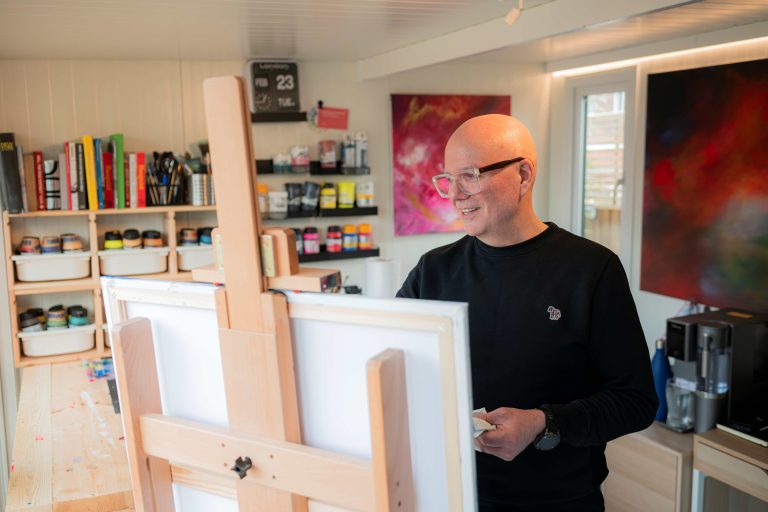
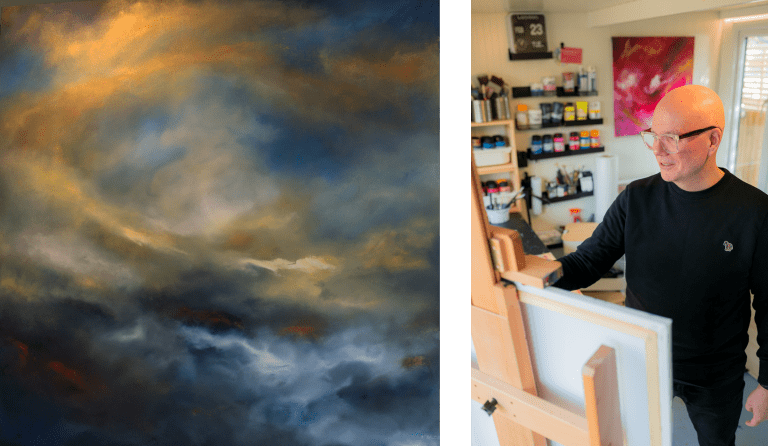
Art Haus paintings are created with atmospheric light in mind – so they often shift gently with the time of day, which is part of the magic.
A final thought
The most important thing is not perfect measuring – it’s how the piece feels when you walk into the room.
Stand back. Squint a little. Does it feel anchored, intentional, part of the space? If yes, you’ve done it right.