By Andy Taylor | Art Haus
I’ve spent a lot of time at the coast. Not in a romantic, sketchbook-under-the-arm kind of way — more standing at the edge of something vast, watching the light do something you couldn’t quite describe, and feeling the need to go home and try to paint it anyway.
Seascape is one of the oldest subjects in painting. It’s also one of the most misunderstood. Because when most people picture a seascape, they picture a pretty wave. A lighthouse. Maybe a boat. Competent, pleasant, largely forgettable.
The best contemporary seascape artists are doing something completely different. And if you’re thinking about buying a seascape — or just want to understand why some of it stops you cold and some of it doesn’t — here’s what I’ve learned, as both a collector of influences and a painter who keeps coming back to the water.
It’s not about the sea. It’s about what the sea feels like.
This sounds obvious until you look at a lot of coastal art and realise how much of it is about what the sea looks like instead.
There’s a difference. A painting that accurately depicts waves has technical skill behind it. A painting that captures the feeling of standing at the shoreline as the weather changes — the pressure in the air, the particular grey-green of the water before a storm, the way the horizon seems to breathe — that requires something else entirely.
The best seascape painters are atmosphere painters first. The sea just happens to be the vehicle. What they’re really painting is light, mood, movement, and the emotional charge of being somewhere elemental and slightly out of control.
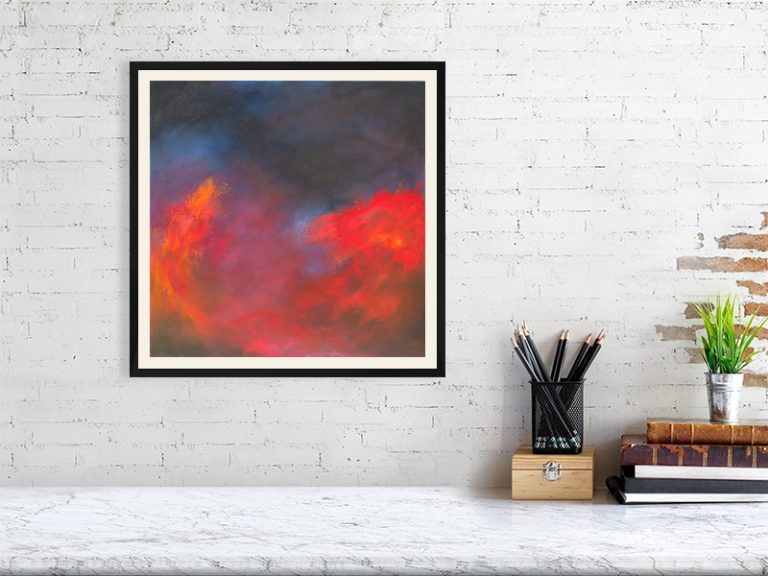
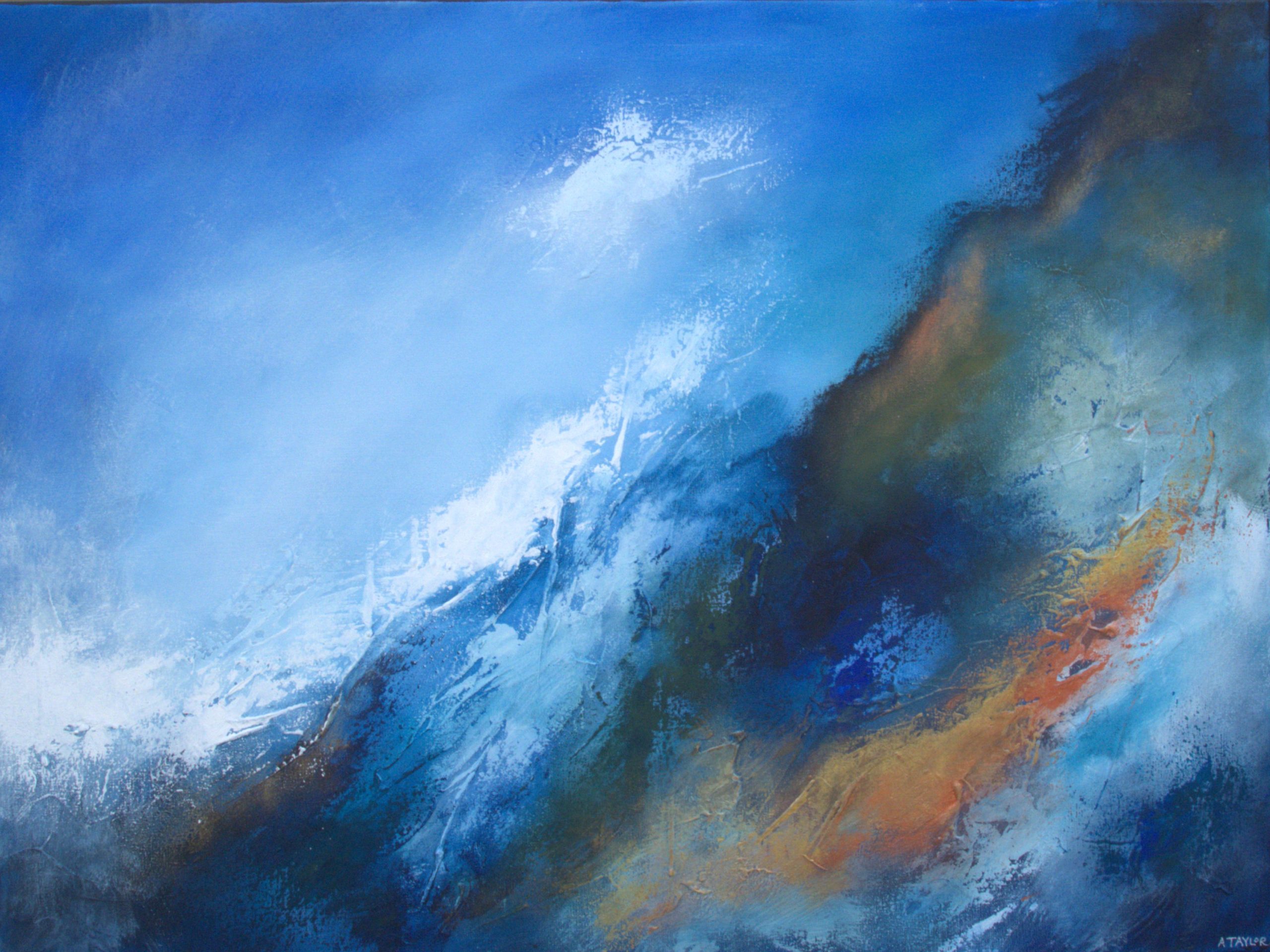
That’s what I’m after when I paint something like Rockpool or Electric Storm. Not a record of a place. A record of a feeling.
What separates good seascape painting from great seascape painting
A few things I look for, both in my own work and in other artists I admire:
Texture that earns its place. Contemporary seascape often uses heavy impasto, layered marks, and physical surface. That’s exciting when it’s used to convey something — the churn of water, the weight of a wave, the roughness of a headland. It’s less interesting when it’s just texture for texture’s sake. The surface of a painting should feel like it was made the only way it could have been made.
Restraint with colour. The sea is not always blue. Often it’s grey, brown, green, almost colourless. The artists who paint it most powerfully tend to use colour carefully — a single warm note against a cool ground, a line of light on the horizon that holds the whole painting together. Too much colour and coastal painting tips into decoration. Too little and it becomes bleak. The interesting work lives in between.
A horizon that means something. In seascape, the horizon is one of the most powerful compositional tools available. Where you place it, how you treat it, whether you soften it or make it sharp — all of that changes how a painting feels. A low horizon gives you sky and space and breathing room. A high horizon gives you depth and pressure and movement. The best seascape artists use the horizon deliberately, not just because the sea has one.
Evidence of real looking. There’s a quality to work that comes from genuine observation that’s very hard to fake. You can always tell when someone has stood somewhere and looked hard at something, versus worked from a reference photograph without really engaging with it. The paintings that last in your mind tend to have that quality of direct looking behind them.
A couple of contemporary seascape artists worth knowing
I’m going to name names here, because this kind of writing is more useful when it’s specific.
Stewart Edmondson is a painter I have a lot of time for. His work has an atmospheric quietness to it — big skies, muted palettes, a strong sense of place that never tips into postcard territory. There’s real restraint in his colour, and the paintings hold up to long looking. If you like seascape that feels meditative rather than dramatic, he’s worth seeking out.
Ciara Gilmore — whose work I know particularly well, having trained with her — paints the sea with a kind of controlled wildness that I find genuinely exciting. She works with abstraction in a way that’s completely grounded in real visual experience. The paintings feel chaotic and precise at the same time, which is a difficult thing to pull off. Her use of light is extraordinary.
Both of them share something important: the sense that the painting could only have been made by this particular person, from this particular relationship with the sea. That’s the thing I look for above all else.
What to look for when you’re buying
If you’re thinking about buying a contemporary seascape, a few practical thoughts:
Look at the body of work, not just the individual piece. An artist with twenty paintings that all have a consistent voice is a safer bet than someone with one stunning outlier. Consistency tells you that the quality isn’t accidental.
Ask about process. How does the artist work? Do they paint from life, from memory, from photographs? There’s no wrong answer, but knowing the answer tells you something about the work. Artists who work from direct observation tend to produce paintings with a quality of presence that’s harder to achieve other ways.
Look at how the work has evolved. An artist who is still developing, still taking risks, still occasionally making paintings that don’t quite work — that’s usually a good sign. It means the interesting work is still ahead of them.
Trust your physical response. I’ve said this before and I’ll keep saying it: the paintings that stop you are the ones worth paying attention to. Not the ones that match your sofa, not the ones that seem like a good investment, not the ones your friend recommended. The ones that make you feel something specific, even if you can’t immediately say what.
My own seascape work
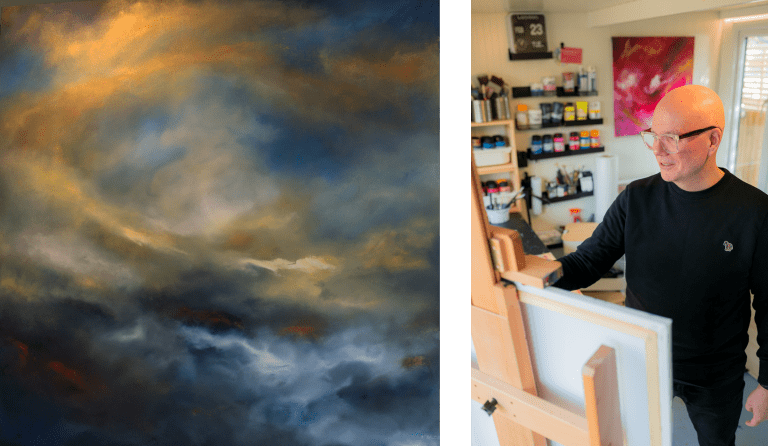
I paint the sea regularly — it’s one of the subjects I keep coming back to, alongside moorland and atmospheric skies. What draws me to it is the same thing that draws me to all landscape: the way weather and light and the physical world create emotional states that are almost impossible to put into words but completely possible to put into paint.
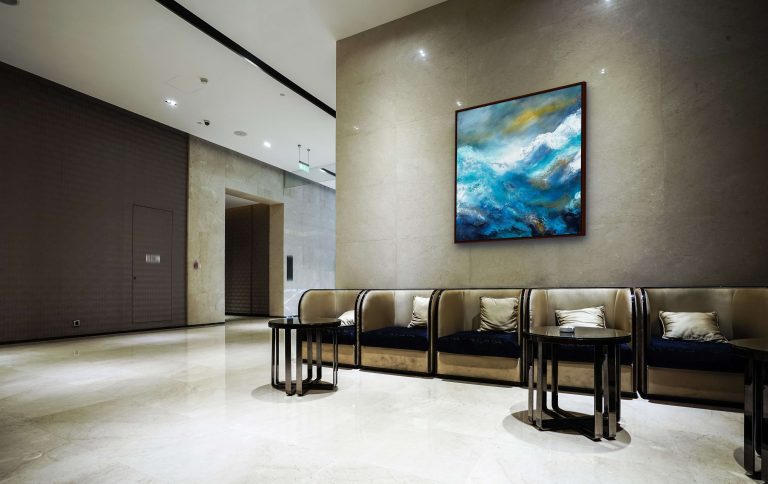
My Ocean and Coastal collection includes some of my favourite pieces — paintings that started with real coastal experiences and ended up somewhere more abstract, more atmospheric, more about feeling than recording.
If you’d like to see the work in person, I’m always happy to arrange a studio visit in Nottingham. There’s something about seascape painting in particular that loses something on a screen — the texture, the scale, the way the surface holds light. Worth the journey if you’re seriously considering buying.
Andy Taylor is an abstract painter based in Nottingham. His Ocean and Coastal collection is available at art-haus.co.uk. Studio viewings by appointment.