By Andy Taylor | Art Haus
Why the Art on Your Office Walls Is Saying More Than You Think
Original art in a workplace does one thing a stock print never can: it tells people someone was paying attention. Everything else in an office communicates something, whether you planned it or not, and the walls are no exception.
I spent years in the corporate world before I became a full-time painter, so I’ve sat on both sides of this. I’ve built go to market strategies for a living, and now I make the kind of work that sometimes ends up on the walls those strategies are trying to represent. That gives me an odd but useful vantage point on why art in the workplace matters more than most businesses think it does.
Walk into any office and you can feel it
Most offices have the same thing on the walls. A generic canvas print bought in bulk from a catalogue. Motivational typography. Sometimes nothing at all, just paint and plasterboard.
Then walk into a handful of others and you’ll see something different: real work, chosen with intent. You can feel the difference before anyone tells you a single thing about the company. That’s not a coincidence. It’s a decision, even when the decision was simply not to make one.
It’s a signal, whether you plan it or not
Every choice a company makes about its physical space communicates something. The furniture, the lighting, the coffee machine, the art. None of it is neutral. Blank walls say something. Stock prints say something. Original work, chosen deliberately, says something else entirely: that this space was considered, and that the company sees itself as more than a place where tasks get done.
You don’t need a large budget or a corporate art advisor to send that signal. You need intent. One well-chosen piece does more for a room than a dozen generic ones, and it costs a fraction of what most businesses assume.
People notice, even when they don’t say so
Clients notice when they’re sat in a boardroom that feels considered rather than default. Candidates notice during interviews, even if they’d never mention it in feedback. Your own people notice too, every single day, whether they clock it consciously or not. Environment shapes how people feel about a place, and how people feel about a place shapes how they perform in it and how they talk about it outside it.
There’s genuine research behind this, not just anecdote. A study from the University of Exeter’s School of Psychology found that employees given real control over their workspace, including the freedom to choose the art and plants around them, were up to 32% more productive than those working in a bare, purely functional office. A separate survey by the British Council for Offices found that half of workers say artwork directly improves their productivity, and most say it makes the workplace feel more welcoming.
Think about the last space you walked into that genuinely felt good to be in. Chances are the art, or the thoughtful absence of it, was part of why.
Original work does something stock prints can’t
Stock art is safe. It’s also invisible. It’s chosen to offend nobody, so it ends up saying nothing. It fades into the background because it was designed to.
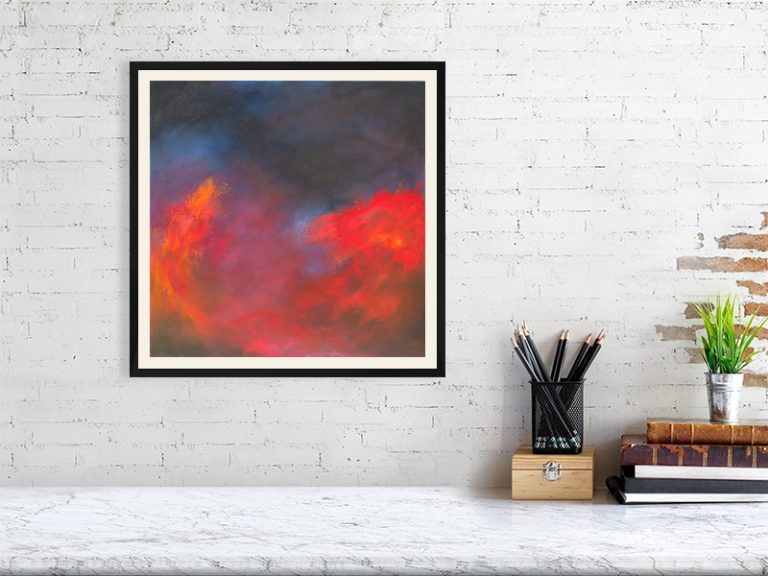
Original work carries texture, energy, a point of view. It gives people something to actually look at rather than look past. I’ve seen this first-hand: 5 of my paintings are currently on show in an open workspace in central Nottingham, and the reaction from people passing through it day to day is completely different to how anyone responds to a print. People stop. People ask about it. It becomes part of how the space feels, not just what fills a gap on the wall.
That’s the real value. Not decoration, but atmosphere. Not filling space but shaping how people experience it.
What this looks like in practice
Taking this seriously doesn’t mean commissioning a full corporate collection. A few starting points that work for most offices:
Reception and client-facing spaces first.
This is where the signal matters most, since it’s the first thing a visitor reads about the business before anyone speaks.
One strong piece beats several weak ones.
A single considered work in a boardroom will outperform a dozen inoffensive prints scattered through corridors.
Scale to the wall, not the budget.
A large piece in a large space reads as intentional. A small piece lost on a big wall reads as an afterthought, regardless of quality.
Let the work have a point of view.
Atmospheric, textured, or bold pieces give people something to engage with. Safe, decorative choices are the ones nobody remembers.
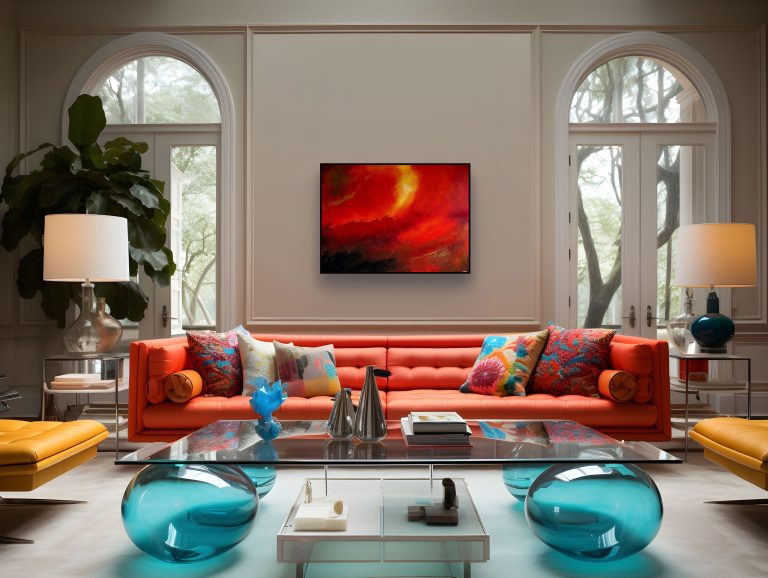
Commissioning a piece for a specific space also means it can be built to fit, in scale, palette, and mood, rather than hoping something off-the-shelf happens to work.
The case for taking it seriously
If physical space communicates something about a business, whether intentionally or not, then art stops being an afterthought and becomes part of the strategy. The same instinct that shapes brand guidelines and tone of voice should extend to what’s on the walls, because the walls are communicating too, with or without your input.
This isn’t about spending a fortune. It’s about being deliberate rather than defaulting to whatever’s cheapest and most forgettable. A considered choice, even a modest one, outperforms an unconsidered one every time.
Next time you’re in your own office, have a proper look at the walls. Ask what they’re saying about the business, and whether that’s actually the message you want to send.